

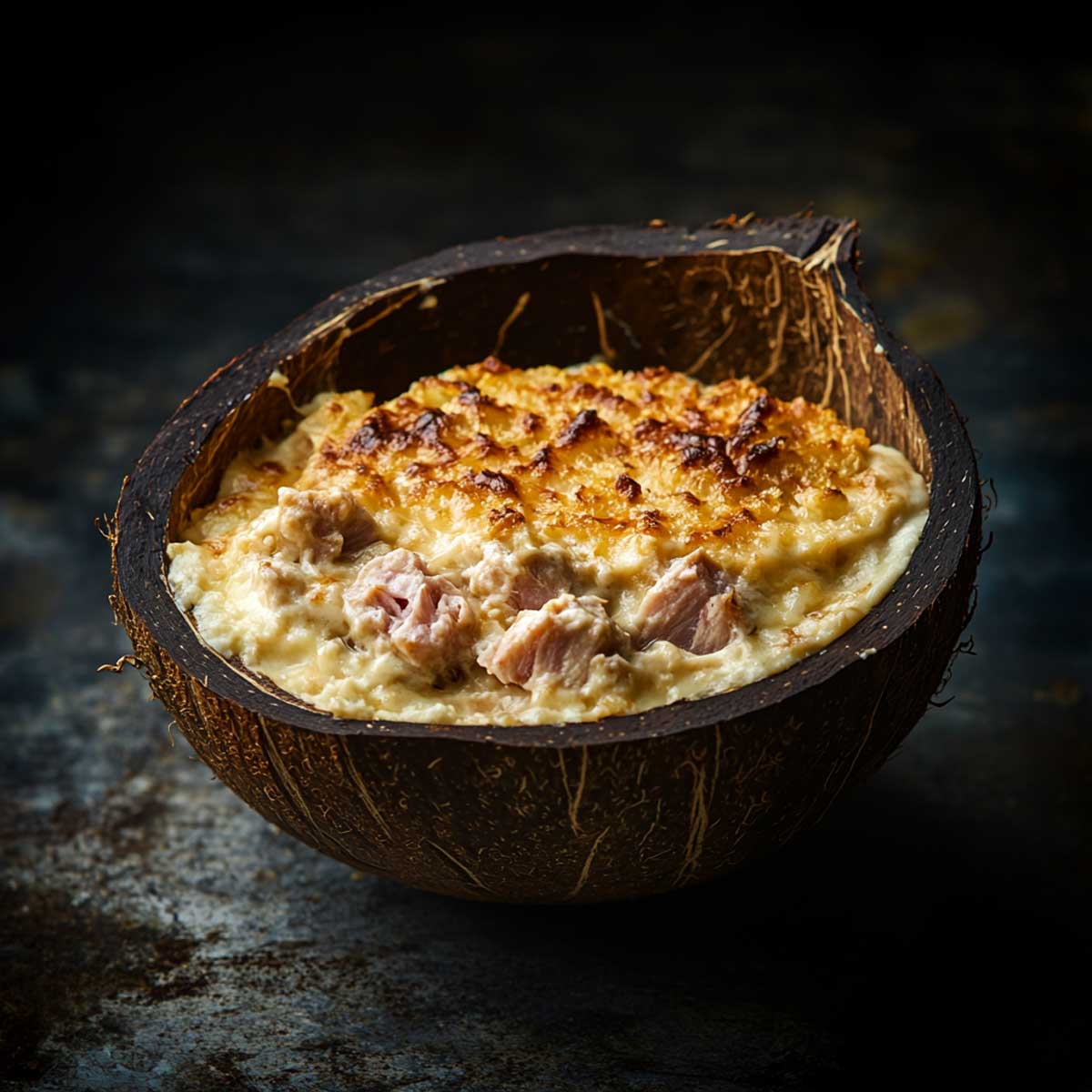
Fai'ai Eleni is canned mackerel (or smoked fish) simmered in thick coconut cream with taro leaves, aromatics, and a squeeze of citrus. It takes under 30 minutes, feeds a crowd on a weeknight budget, and tastes like a seaside homecoming. The method overview is here; precise timings, the cream-never-curdles ratio, and the anti-itch taro leaf tip live in the Samoan Recipe Club.
In this guide
This recipe lives in the Samoan Recipe Club — the full Samoan Delights collection on your phone while you cook. Your screen stays awake, ingredients tick off as you go, and every dish comes with the story behind it. Plus 30% off everything in the store, automatically.
Prefer it on your shelf? The hardcover cookbook →
- What is Fai'ai Eleni and why is it called that?
- What ingredients do you need?
- How do you make Fai'ai Eleni step by step?
- What are the best ingredient swaps?
- How do you serve Fai'ai Eleni?
- Frequently asked questions
What is Fai'ai Eleni and why is it called that?
In the late 19th century, German and New Zealand trading ships docked at Apia Harbour carrying barrels of salted herring. The labels read "Elena," the German version of Helen. Islanders shortened it to "Eleni," and a new protein slipped into Samoan food culture alongside reef fish and octopus. Missionaries promoted the canned staple as a Lenten alternative to pork; families embraced it for convenience when storms made lagoon fishing dangerous.
Samoans rarely leave an ingredient untouched by coconut. Village cooks discovered that simmering smoked fish in pe'epe'e (freshly squeezed coconut cream) mellowed its briny bite. Taro leaves added earthy depth. A few laupinia (bird's eye chilies) cut the richness. The final flourish of spring onion and citrus turned pantry odds-and-ends into a dish worthy of To'onai, the Sunday feast.
Today, canned mackerel has eclipsed the original herring. The name "Eleni" clings to the recipe anyway, like barnacles to a fishing canoe.
| Detail | What to know |
|---|---|
| Origin | Samoa, late 19th century |
| Main protein | Canned smoked mackerel (or herring) |
| Base sauce | Full-fat coconut cream |
| Greens | Taro leaves, baby spinach, or silverbeet |
| Serve with | Rice, taro, breadfruit |
| Active cook time | Under 30 minutes |
What ingredients do you need?
- Canned smoked mackerel (around 400g tin)
- Thick coconut cream (approximately 2 cups, full-fat)
- Blanched taro leaves or baby spinach
- Onion and spring onion stalks
- Fresh ginger and garlic
- Lime or lemon for finishing
- Sea salt and cracked pepper
Precise gram weights, brand picks (not all canned fish is equal), and the cream-never-curdles ratio chart live in the Samoan Recipe Club. That keepsake hardcover also includes five other traditional Samoan mains.
How do you make Fai'ai Eleni step by step?
- Saute the aromatics. Heat a slick of coconut oil in a wide pan. Cook the onion, ginger, and garlic until fragrant and softened.
- Add the coconut cream. Pour in the cream and bring to a gentle bubble. Do not boil hard or the cream will split.
- Add the fish and greens. Nestle in the drained mackerel pieces and the blanched taro leaves (or spinach). Simmer until everything is heated through and the flavours have married.
- Finish and serve. Squeeze over lime or lemon, scatter spring onion, and add chili to taste. Serve immediately.
Exact simmer times, the fat-split temperature to watch for, and the "cream broke" rescue fix are in the Samoan Recipe Club. The steps above will get you a good result; the book gets you a consistent one.
What are the best ingredient swaps?
Mackerel vs herring
Traditionalists want the smoky punch of herring, but mackerel is easier to find in supermarkets and has a richer flavour. Either works. Drain well. For a vegetarian version, wood-smoked tofu cubes give a surprisingly convincing result.
Fresh vs canned coconut cream
Fresh pe'epe'e, cracked from a green nut, is the gold standard. For weeknights, choose canned cream with more than 20% fat and no stabilisers. The thicker the better.
Taro leaves vs other greens
Nothing beats island taro leaves for earthiness. In city kitchens, baby spinach, kale, or silverbeet all work. If you use taro leaves, blanch them first to remove the itch.
For more Samoan mains that use coconut cream as a base, see the palusami recipe. Both dishes lean on the same pe'epe'e foundation.
How do you serve Fai'ai Eleni?
- Classic: Ladled over steamed taro, breadfruit, or plain white rice.
- Modern bowl: Over quinoa with roast vegetables and an extra drizzle of coconut cream.
- Party platter: Served in a hollowed coconut shell beside lime wedges for a to'onai centrepiece.
Fai'ai Eleni refrigerates for 3 days. The sauce thickens overnight and makes an excellent toast topper the next morning. For the full collection of Samoan mains and sweets, browse the books collection.
Cooking this for a crowd is its own problem. What a Samoan feast table is built from sets out which Samoan dishes scale to thirty people and which have to be made on the morning.
Frequently asked questions
Why does my coconut cream split when cooking Fai'ai Eleni?
Over-boiling or low-fat cream. Keep the heat gentle and use full-fat canned cream with over 20% fat content. The detailed troubleshooting chart with temperatures and warning signs is in the Samoan Recipe Club.
Can I use fresh mackerel instead of canned?
Yes. Lightly smoke or pan-sear fresh mackerel first to mimic the flavour depth of canned, then proceed with the recipe as normal.
Is Fai'ai Eleni spicy?
Traditional versions do not include heat. The dish is mild. Add bird's eye chili to taste if you want spice; leave it out if you are cooking for kids or elders who prefer it plain.
What does "Fai'ai Eleni" mean in Samoan?
"Fai'ai" roughly translates to "cooked together" or a method of braising. "Eleni" comes from the German word "Elena" (Helen), which was the brand name on barrels of salted herring brought by German traders in the 1800s. The name stuck even as the fish changed.
Is Fai'ai Eleni healthy?
It is a protein and calcium-rich dish. Taro leaves deliver iron; canned mackerel provides omega-3 fatty acids; coconut cream adds healthy fat. It is a nutritious one-pan meal by most standards.
the Samoan Recipe Club
Six traditional Samoan mains with precise timings, ratio charts, and full methods. Fai'ai Eleni is one of them.
Made-to-order by a Samoan-owned brand. Worldwide shipping.
This recipe lives in the Samoan Recipe Club — the full Samoan Delights collection on your phone while you cook. Your screen stays awake, ingredients tick off as you go, and every dish comes with the story behind it. Plus 30% off everything in the store, automatically.
Prefer it on your shelf? The hardcover cookbook →


