

Short answer: The standard way to say hello in Samoan is Talofa, which means love to you. The fuller, more formal form is Talofa lava. Other important greetings include Malo le soifua (greetings to your good health), Malo le taeao (good morning), and Malo le afiafi (good evening). In Samoan culture, greetings are not casual formalities. They are the first expression of alofa (love and respect) in any encounter, and getting them right matters.
In every culture the greeting is the opening act of human connection. In Gagana Samoa it carries more weight than most. Greeting someone properly is not a formality to rush through. It is the first expression of alofa, the Samoan value of love, compassion, and respect, and it sets the tone for everything that follows.
In this guide
- The primary greeting: Talofa
- Talofa lava: the fuller form
- Malo le soifua: greeting good health
- Time-of-day and farewell greetings
- How do you respond to Samoan greetings?
- Why do Samoan greetings matter?
- Frequently asked questions
The primary greeting: Talofa
Talofa is the standard Samoan greeting, used across formal and informal contexts throughout the day. It is the first Samoan word most learners meet, and the word that appears in almost every Samoan cultural setting worldwide.
The word breaks down like this: ta is a shortened form of ita (I/me), and alofa is the Samoan word for love, compassion, and generosity. Together, talofa means love to you. So the greeting is not a neutral acknowledgment. Every time a Samoan person says talofa, at the etymological level they are expressing love for the person they are greeting.
This fits the Samoan view that encounters between people are moments of relationship, not transactions. Talofa honours the other person as someone whose presence deserves to be welcomed.
Talofa lava: the fuller form
Talofa lava is the more formal and emphatic version. The word lava means indeed, truly, or absolutely, and its addition makes the greeting more heartfelt and ceremonially correct. When addressing elders, matai (chiefly title holders), guests, or anyone in a formal setting, talofa lava is more appropriate than the shorter talofa.
In speeches, formal gatherings, and any context where the full weight of protocol applies, talofa lava is the expected opening. Many Samoan leaders and pastors begin any address with talofa lava to the assembled gathering.
Malo le soifua: greeting good health
Malo le soifua is a particularly respectful and culturally rich greeting. It translates as greetings to your good health or well done for maintaining your life. Malo is an expression of appreciation or commendation, and soifua means life, health, or wellbeing.
This greeting reflects the Samoan understanding that good health and continued life are not to be taken for granted. To greet someone with malo le soifua is to recognise that they are here, that they are well, and that this is worth acknowledging. It is more formal than talofa and is especially appropriate for elders, matai, and community leaders. The reply is often soifua alone, or manuia (be blessed), or another malo le soifua in return.
Time-of-day and farewell greetings
Samoan has specific greetings for different times of day, each built on the same malo le structure:
| Samoan | Meaning |
|---|---|
| Malo le taeao | Good morning (literally well done for the morning) |
| Malo le 'auauli | Good midday / good afternoon |
| Malo le afiafi | Good evening (literally well done for the evening) |
| Manuia le po | Good night (may your night be blessed) |
| Tofa soifua | Goodbye (sleep / farewell in good health) |
These are not just translations of English hellos. The malo le structure acknowledges the person's continued existence and good health at each part of the day. Even good morning in Samoan is a small expression of gratitude that the person has made it to the morning. Tofa alone is a shorter, more casual farewell, and manuia (be blessed) works as both a farewell and a response to thanks.
How do you respond to Samoan greetings?
When someone says talofa or talofa lava, the most natural reply is to return the same greeting. You can also respond with manuia (be blessed) or ask O a mai oe? (How are you?) to continue the exchange.
When someone says malo le soifua, appropriate replies include:
- Soifua (health, a simple dignified response)
- Manuia (be blessed)
- Fa'afetai (thank you, for the good wishes)
- Returning Malo le soifua to them
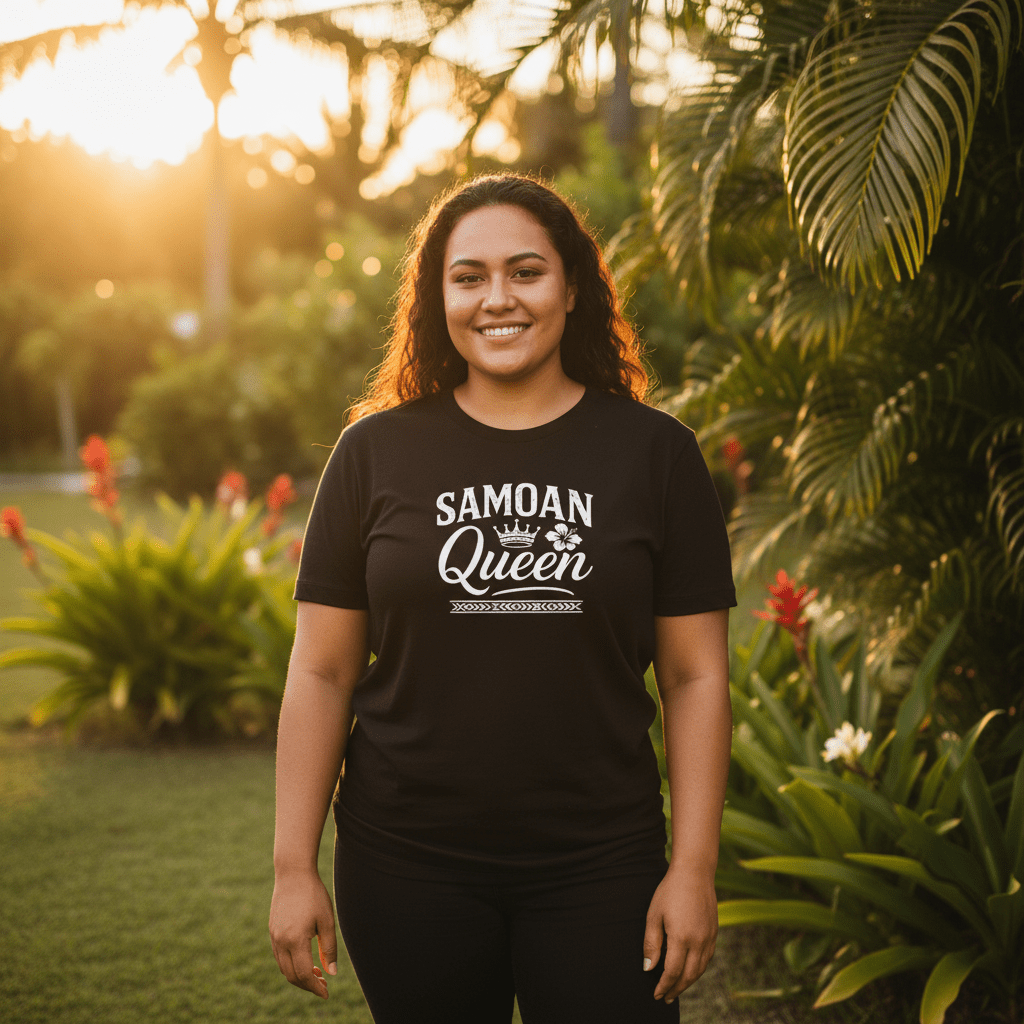
Saying Straight Outta Samoa is its own kind of hello, the one you wear before you open your mouth. For diaspora Samoans whose talofa comes more easily than a full conversation, it answers where are you from in three words and a print.

For when your Samoan is broken but your pride isn't. A heavyweight tee that greets the room before you do.
Why do Samoan greetings matter?
In Fa'a Samoa, encounters between people are never casual. Even a brief exchange in passing carries social and relational weight. Taking the time to greet someone properly, with the correct form for the relationship and context, expresses va, the Samoan concept of the sacred relational space between people.
Greeting an elder incorrectly, using an informal greeting where a formal one belongs, is a breach of fa'aaloalo, the value of respect. Skipping a greeting entirely is considered rude in a way that goes deeper than etiquette: it fails to acknowledge the other person's worth.
For learners and non-Samoans engaging with Samoan communities, making the effort to use correct greetings is one of the most immediately visible signs of cultural respect. It is always appreciated.

685 is Samoa's country code, and a quiet talofa to anyone who knows. Yes people will ask about it. Yes you'll enjoy explaining.
If you want to go deeper than hello, our guide on how Samoans say thank you with fa'afetai covers the other half of everyday respect in Gagana Samoa. You can also explore the full apparel collection for Samoan word-art and tatau-inspired designs.
Every year there is a week built around exactly this. The Samoan Language Week guide covers Vaiaso o le Gagana Samoa, the five phrases worth learning first, and what to wear that starts the conversation for you.
Frequently asked questions
How do you say hello in Samoan?
The standard Samoan greeting is Talofa, meaning love to you. The fuller and more formal version, Talofa lava, adds the word lava (indeed or truly) for additional warmth and formality. For addressing elders, matai, or in formal settings, Talofa lava is the more appropriate form.
What does Talofa mean in Samoan?
Talofa means love to you. The word is composed of ta (a shortened form of I) and alofa (love, compassion, generosity). In practice it functions as the standard hello, but etymologically it is a declaration of love and regard for the person being greeted, reflecting the Samoan value of alofa.
What is the most respectful Samoan greeting?
Malo le soifua is among the most respectful Samoan greetings. It translates as greetings to your good health and is particularly appropriate for elders, matai, church leaders, or formal contexts. It acknowledges the other person's continued health and life as something worthy of recognition. Talofa lava is also formal and respectful.
How do you say good morning in Samoan?
Good morning in Samoan is Malo le taeao, literally well done for the morning. The greetings for other times of day follow the same structure: Malo le 'auauli (good midday/afternoon) and Malo le afiafi (good evening). Manuia le po means good night.
How do you say goodbye in Samoan?
The most common Samoan farewell is Tofa soifua, meaning sleep in good health or farewell in good health. Tofa alone is a slightly more casual goodbye. Manuia (be blessed or be well) is a versatile expression that serves as both a farewell and a response to thanks.
Say talofa without saying a word
Samoan word-art and tatau-inspired designs for the diaspora who carry the language with them.
Shop the apparel collection →Made-to-order by a Samoan-owned brand. Worldwide shipping.


