

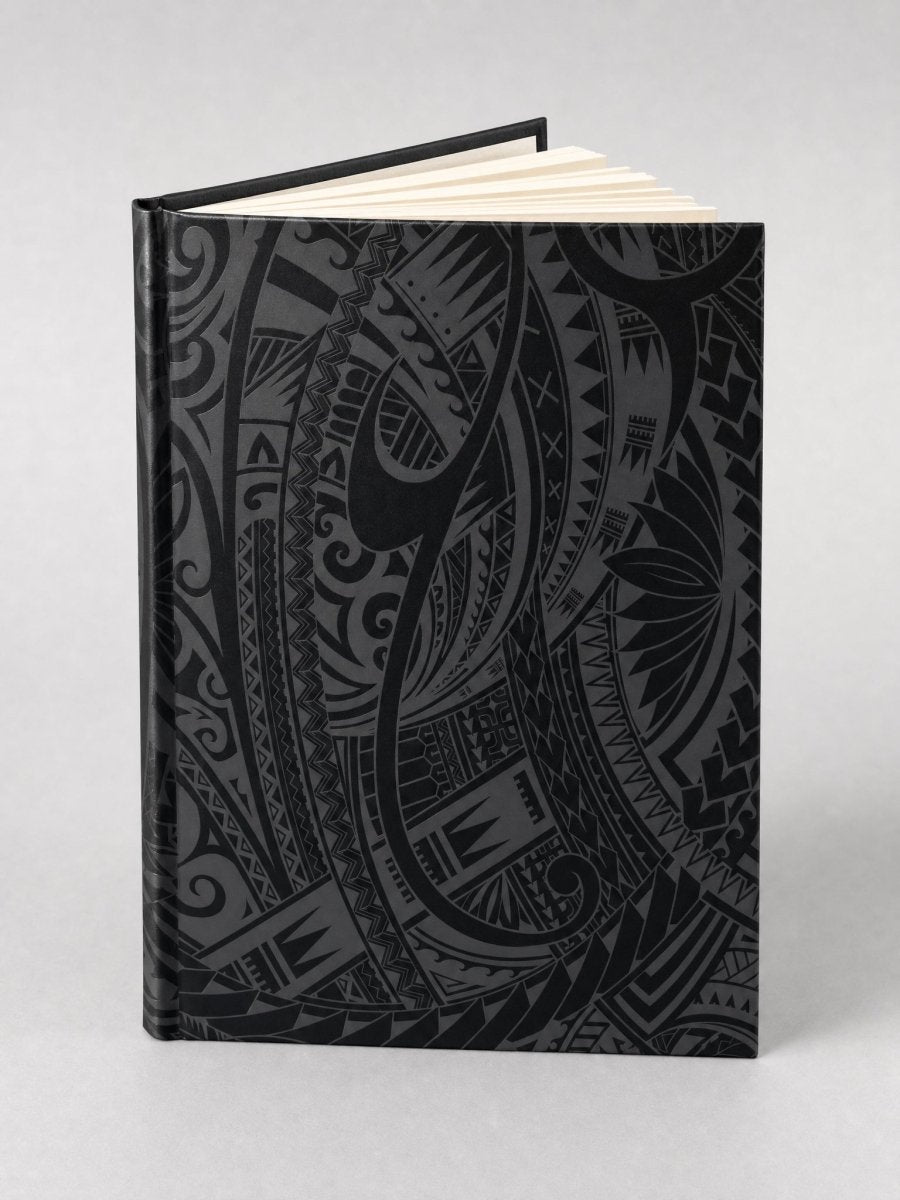
Most New Year goals die in the third week of January, and the reason is almost never the goal. It is that the goal was written somewhere you never look again. A paper journal beats an app for exactly one reason: it is physically in the room with you. What follows is how to set the thing up so it survives February, and why the cover matters more than it should.
In this article
- Why paper beats an app
- How to set it up
- Does the cover matter
- What else changes
- What to write in it
- Frequently asked questions
Why does a paper journal work better than a goals app?
An app competes with every other app on the phone. A notebook on a bedside table competes with nothing. That is most of it.
There is also a writing effect worth knowing. Research on goal setting has repeatedly found that people who write their goals down and review them are more likely to follow through than people who only hold them in their head. You do not need to believe any particular number to accept the mechanism: writing forces you to be specific, and specific goals are the only kind you can tell you have missed.
How do you set up a journal so you still use it in March?
Four pages at the front, then leave the rest alone.
- Page one: the year in one sentence. Not a list. One sentence you could say out loud
- Page two: three things, no more. Three is the number people finish. Ten is the number people abandon
- Page three: what you will stop. Harder than the start list and usually more useful
- Page four: a monthly check, twelve lines. One line per month. It takes two minutes and it is the page that keeps the book alive
Then write in it whenever. The setup is what fails, not the habit.

Two hardcover journals in Pacific prints, sold together for less than the two separately. One for the year, one for whatever the year turns out to need.
See the New Year shelf →Does it matter what the journal looks like?
More than it should, and for a reason that is not vanity. A plain black notebook looks like every work notebook you own, so it gets stacked with them and lost. A cover you recognise from across a room gets picked up.
There is a second thing for anyone in the diaspora. Writing your own year into a book that carries your own pattern is a small act, but it is not nothing. It puts the culture in your hands on an ordinary Tuesday rather than only at a family gathering.

What else do people buy when they have decided something?
The New Year shelf is journals, gym bags and the things people buy at the exact moment they have decided to change something. That is a real pattern, not a marketing one. The purchase is part of the commitment.
Use it. Buy the bag when you sign up, not after the third session. And if the goal is cooking more at home, a recipe keepsake is a better buy than another app subscription, because it sits open on the bench.
What do you actually write in a journal if you are not a journaller?
Most people stall here, because the blank page implies you are supposed to write feelings and most people do not want to. You do not have to. A journal that gets used is usually a record, not a diary.
- A line a day. What happened, not how you felt about it. Takes twenty seconds and is the version that survives
- The list you keep losing. Church roster, who owes what for the fa'alavelave, the shopping. One book instead of six envelopes
- Recipes as you learn them. The ones you are being shown rather than taught. Write them down the same day or they are gone
- Money, weekly. One page a month, four numbers a week. It is the most boring use of a journal and the most valuable
The one that matters most in a Samoan family is the third. An enormous amount of Pacific cooking is held in people's hands rather than on paper, and it disappears in a single generation when nobody writes it down. A journal used for that reason alone has already justified itself.
Nothing here is sitting in a warehouse. Each piece is printed and sewn after the order is placed, which has two consequences worth planning around. The good one is that there is no dead stock, so a print does not get discounted into landfill at the end of a season and sizes that sell slowly still exist. The inconvenient one is the production window: there are several days between you paying and anything being handed to a courier.
The practical rule is three weeks from order to door for Australia and New Zealand, and closer to four if it is crossing an ocean. Work backwards from the date you need it, not forwards from today. There is more on why the model works this way in why made to order is the future of sustainable fashion.
Frequently asked questions
Do written goals work better than goals in your head?
Writing a goal down forces you to make it specific and gives you something to review. Specific, reviewed goals are far easier to follow through on than ones you only hold in your head.
How many New Year goals should you set?
Three. Three is the number most people finish. Long lists split attention and the whole list gets abandoned together.
What size journal is best for goal setting?
A hardcover around A5 is the practical size. Big enough to write properly, small enough to travel, and rigid enough to write on your knee.
Are journals a good gift?
They are one of the safest gifts there is. No size, no fit, and the recipient decides what it becomes.
Blank page, your pattern
Hardcover journals in Pacific prints, plus the bags and gear people buy the moment they have decided something.
Shop the New Year shelf →Made to order. Order before Christmas to have it for 1 January.
Read next: Samoan Patterns and What They Mean · Why Choose Samoan Owned Brands


