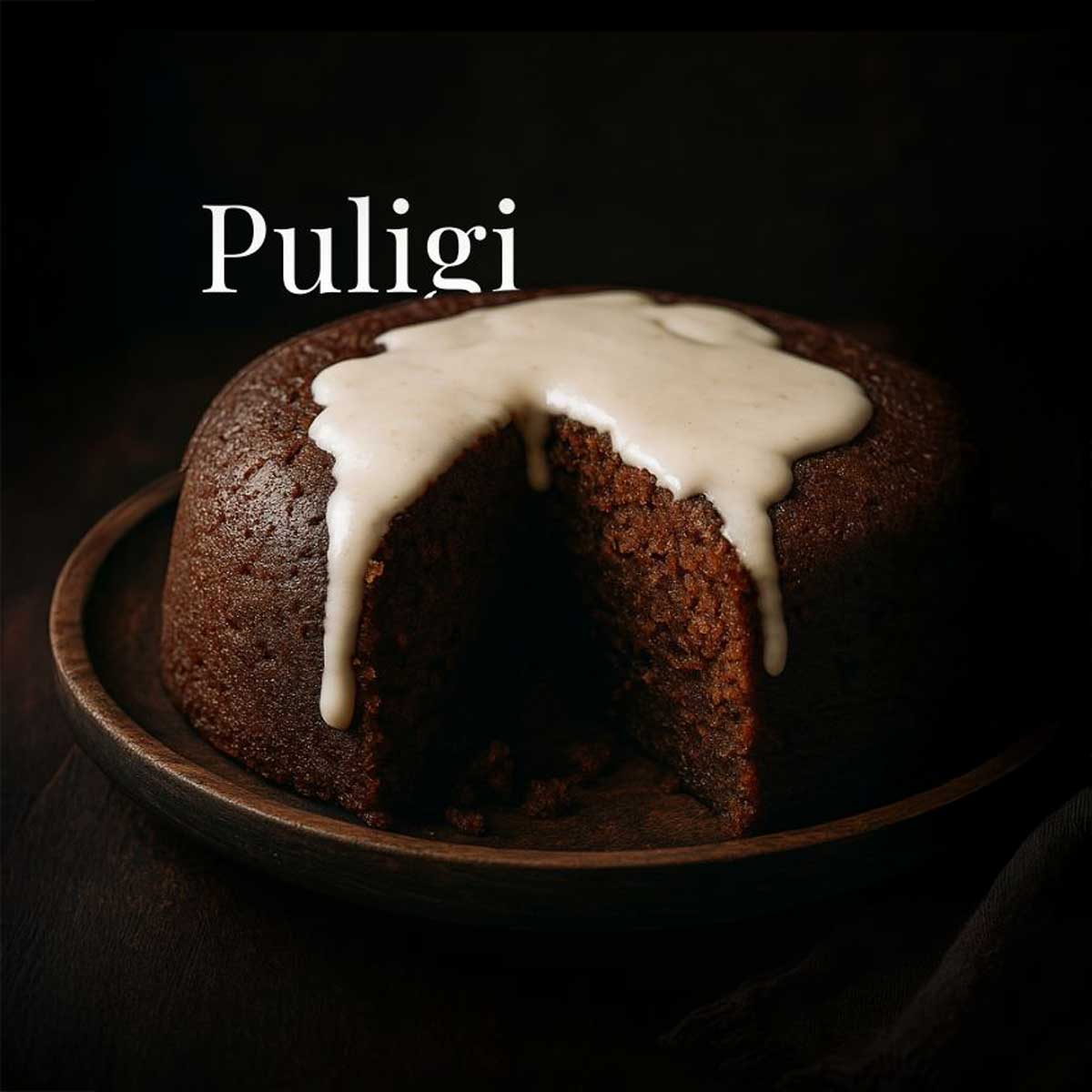
TL;DR: Puligi is a traditional Samoan steamed pudding made with flour, sugar, coconut cream, and often banana or other tropical fruit. It is cooked wrapped in leaves or in a pot, producing a dense, sweet, moist pudding. Puligi is a staple of Samoan feasts and gatherings, and this recipe adapts the traditional method for a home kitchen.
Introduction
Puligi is one of those Samoan dishes that diaspora community members reliably light up when they talk about. It is a steamed pudding with a unique texture: dense and moist, sweet without being cloying, with the deep richness of coconut cream running through every bite. It is not a delicate dessert. It is a generous, substantial one.
The word puligi is thought to derive from the English word "pudding," adapted through the Samoan phonological system. Like many aspects of Samoan food culture, it blends introduced ingredients and techniques with Pacific flavours and communal cooking traditions. The result is something that belongs entirely to Samoa.
What Is Puligi?
Puligi is a steamed flour pudding. At its core it combines flour, sugar, coconut cream, and a raising agent (traditionally baking powder), often with the addition of banana, pumpkin, taro, or other available produce. The mixture is wrapped in banana or taro leaves and steamed or cooked in an umu (earth oven), or boiled in a pot of water, producing a moist, dense pudding.
Puligi has a texture somewhere between a steamed suet pudding and a dense banana bread. It is solid enough to hold its shape when unwrapped and sliced, but moist throughout. It does not have the cake-like crumb of a baked pudding. The steam cooking produces a distinctly Samoan texture.
Cultural Significance
Puligi sits firmly in the tradition of Samoan communal food: made in large quantities, cooked in an umu or over community fires, and served to many people at once. It is a regular feature of Sunday feasts, church lunches, funeral receptions, and birthday celebrations across Samoa and the diaspora.
The genius of puligi is its adaptability. The basic recipe can absorb almost any starchy or sweet addition. Banana puligi, pumpkin puligi, taro puligi, and combinations thereof are all found across Samoan communities. Families develop their own preferred versions and pass them down as a matter of household identity.
For diaspora Samoans, making puligi at home is often a way of maintaining a physical connection to Samoan food traditions when umu cooking and community gatherings are less accessible than they were in Samoa or in Pacific communities at home.
Ingredients
- 2 cups plain flour
- 2 teaspoons baking powder
- 1/2 cup sugar
- 1/2 teaspoon salt
- 400ml full-fat coconut cream
- 2-3 ripe bananas, mashed (or 1 cup mashed pumpkin or taro)
- 2 tablespoons melted coconut oil or butter
- Optional: vanilla extract (1/2 teaspoon)
Serves 8-10
Method
Step 1: Prepare Your Steaming Setup
You have several options. You can use a large pot with a steamer basket and a tight-fitting lid, a pressure cooker, or a pudding basin placed in a water bath in the oven (180°C). For a traditional effect, line your steaming vessel or a pudding basin with a double layer of foil and then baking paper to seal in the steam.
Step 2: Mix Dry Ingredients
In a large bowl, combine the flour, baking powder, sugar, and salt. Whisk together to distribute the raising agent evenly.
Step 3: Mix Wet Ingredients
In a separate bowl, combine the coconut cream, mashed banana (or other fruit/vegetable), melted coconut oil, and vanilla if using. Mix well.
Step 4: Combine
Add the wet mixture to the dry ingredients and fold together until just combined. Do not overmix. The batter should be thick but pourable.
Step 5: Steam
Pot steaming: Pour the batter into a well-greased pudding basin or a heatproof bowl. Cover tightly with foil. Place in a steamer basket over boiling water. Steam with the lid on for 45-60 minutes, checking the water level and topping up as needed. The pudding is done when a skewer comes out clean.
Oven water bath: Pour batter into a greased baking dish. Cover tightly with foil. Place in a larger roasting pan filled with hot water to come halfway up the sides. Bake at 160°C for 50-60 minutes until firm in the centre.
Pressure cooker: Pour batter into a greased, foil-covered pudding basin. Place on the trivet in the pressure cooker with 1 cup of water. Pressure cook on high for 25-30 minutes. Natural release for 10 minutes.
Step 6: Rest and Serve
Allow the puligi to rest for 10-15 minutes before unmoulding. Turn out onto a serving plate and slice to serve. Optionally, pour warmed coconut cream over the top before serving.
Tips for Perfect Puligi
- Do not overmix. Overmixing develops gluten and makes the pudding tough. Fold until just combined and stop.
- Seal tightly. Steam is what cooks puligi. Any escape of steam will result in an unevenly cooked pudding. Cover tightly with two layers of foil before steaming.
- Full-fat coconut cream. The fat content is essential for the moist, rich texture. Light coconut cream will produce a drier, less flavourful result.
- Very ripe banana. Heavily spotted bananas are sweeter and incorporate more easily. Less ripe bananas will give a starchier, blander result.
Variations
Pumpkin puligi: Replace banana with 1 cup of cooked, well-drained mashed pumpkin. Reduce sugar slightly as pumpkin is less sweet than banana. Add a pinch of nutmeg.
Taro puligi: Replace banana with 1 cup of cooked, mashed taro. This produces a slightly firmer, more starchy pudding with an earthy flavour that pairs well with extra coconut cream.
Plain puligi: Omit any fruit or vegetable addition and rely entirely on the coconut cream for flavour. This is the simplest version and still very good.
At The Koko Samoa, Samoan food culture is part of everything we celebrate. Browse our Samoan-designed clothing, read more recipes on our culture blog, or explore our full collection.
Conclusion
Puligi is Samoan pudding culture at its most generous. It is dense, rich, and made for sharing. Once you have made it at home, you will understand why it shows up at every significant Samoan gathering. It feeds people well, it tastes like the Pacific, and it always brings more of everything to the table.
If you are making this to give away rather than to eat, the Samoan gifts that are never the wrong size covers the keepsakes and kitchen pieces that get handed over with it.
Frequently Asked Questions
What is puligi?
Puligi is a traditional Samoan steamed pudding made from flour, coconut cream, sugar, and often banana, pumpkin, or taro. The name is thought to derive from the English word "pudding." It is cooked by steaming, either in an umu (earth oven), in a pot of water, or in a pressure cooker. It is a dense, moist, sweet dessert and a staple of Samoan communal feasts.
Can I bake puligi instead of steaming it?
Yes. You can bake puligi in an oven water bath at 160°C with the dish covered tightly in foil. This creates a similar steaming effect to pot steaming. The result is very similar to the steamed version, though traditional steaming or umu cooking gives a slightly moister texture.
What can I use instead of banana in puligi?
Common alternatives include cooked and mashed pumpkin, cooked and mashed taro, or a combination of these. Each gives a slightly different flavour and texture. You can also make a plain coconut cream puligi without any fruit or vegetable addition.
How long does puligi keep?
Puligi keeps refrigerated for 3-4 days, covered. It is good served warm or cold. Reheat slices in the microwave for 30-60 seconds or in a low oven at 150°C covered with foil to retain moisture.
Is puligi the same as Samoan pudding?
Puligi is one type of Samoan pudding. Other Samoan desserts that could broadly be called puddings include fa'ausi (cassava and coconut cream) and taufolo (banana and coconut cream). Each has a distinct recipe and texture. Puligi specifically refers to the flour-based steamed pudding.


